Carved in Stone, Alive with Art: Lalibela’s Hidden Creative Markets
Walking through Lalibela, I didn’t expect to find art thriving in its winding market lanes. Beyond the famous rock-hewn churches lies a living culture where craftsmanship and commerce meet. Local artisans shape crosses, textiles, and religious icons with centuries-old techniques, selling them in vibrant open-air stalls. This is not just shopping—it’s a dialogue with tradition, faith, and creative resilience in one of Africa’s most spiritual destinations. The air hums with quiet devotion, the scent of frankincense lingering like a whispered prayer, while every carved line and woven thread tells a story of endurance, identity, and sacred beauty.
The Spiritual Heartbeat of Lalibela
Lalibela stands as one of the most revered pilgrimage sites in Ethiopia, a place where faith is not only practiced but physically carved into the landscape. Designated a UNESCO World Heritage site in 1978, the town is best known for its eleven monolithic churches, hewn directly from volcanic rock in the 12th and 13th centuries under the reign of King Lalibela. These structures were intended to form a "New Jerusalem" for Christians who could not make the pilgrimage to the Holy Land, offering a sacred alternative rooted in divine inspiration and human determination. Even today, the churches remain active centers of worship, where priests in flowing robes chant ancient hymns and pilgrims kneel on stone floors worn smooth by centuries of devotion.
The spiritual atmosphere in Lalibela is palpable, shaping not only religious life but the rhythm of daily existence. Every dawn brings the sound of church bells echoing across the highland terrain, calling the faithful to morning prayers. Religious festivals such as Timkat (Epiphany) and Meskel (Finding of the True Cross) draw thousands of pilgrims who journey from across the country, filling the town with song, incense, and colorful processions. This deep-rooted spirituality infuses every aspect of community life, including the creative economy. Art in Lalibela is not a separate cultural expression—it is an extension of worship, a way of honoring the divine through skilled hands and patient labor.
Understanding this sacred context is essential to appreciating the town’s artistic output. The artisans who craft religious objects do so not merely for income but as acts of piety. A wooden cross is not just a souvenir; it is a devotional item imbued with spiritual significance. A handwoven shawl may carry symbolic patterns passed down through generations, echoing biblical narratives or regional traditions. The churches themselves serve as both inspiration and sanctuary, their intricate carvings and symbolic architecture influencing the motifs found in local crafts. This seamless integration of faith and creativity makes Lalibela unique—a place where art is not displayed in galleries but lived in the streets, markets, and homes of a deeply spiritual people.
Art Beyond the Churches: A Living Tradition
While the rock-hewn churches are the centerpiece of Lalibela’s global reputation, the true heartbeat of its artistic culture pulses in the lanes and courtyards beyond the sacred compounds. Here, craftsmanship is not a relic of the past but a living, evolving tradition sustained by skilled artisans who uphold ancestral methods with quiet pride. Woodcarving, textile weaving, silverwork, and manuscript illumination are not isolated crafts but interwoven threads in the fabric of daily life. These practices are deeply rooted in Ethiopian Orthodox Christianity, where religious expression has long been channeled through visual and tactile forms. Icons, crosses, and liturgical garments are not merely decorative—they are sacred tools of worship, believed to carry spiritual presence and power.
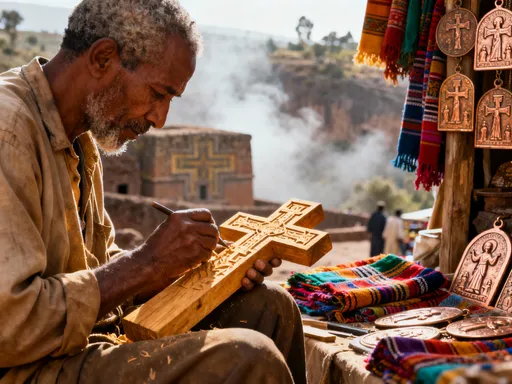
Visitors wandering through the town’s quieter alleys may stumble upon small workshops where artisans work with focused precision. A woodcarver might be seen shaping a cross from olive or sycamore fig, his hands moving with the confidence of someone who learned the craft from his father, who learned it from his. Nearby, a woman weaves cotton into a netela, the traditional white shawl adorned with colorful borders, using a simple backstrap loom. These creations are not mass-produced for tourist consumption but made with ritual care, often blessed before sale. The process itself is meditative, a form of devotion as much as labor. Many artisans begin their work with prayer, seeking divine guidance in their designs and execution.
What makes this tradition especially resilient is the way knowledge is passed down within families and communities. Apprenticeships are informal but rigorous, with young relatives learning by observation and repetition. A grandson might sit beside his grandfather, sanding a cross or mixing natural dyes, absorbing techniques that have changed little over centuries. This intergenerational transmission ensures that the craft remains authentic, even as it adapts to modern demands. While some artisans now incorporate subtle innovations—such as slightly larger cross designs for wall display or brighter thread colors to appeal to international tastes—the core methods and meanings remain intact. In Lalibela, art is not a commodity to be perfected for marketability; it is a sacred inheritance to be honored and preserved.
Exploring the Commercial Hubs: Where Faith Meets Market Life
The commercial life of Lalibela unfolds organically around the church complexes, where pathways lined with stone steps and carved tunnels lead not only to places of worship but also to bustling market zones. These areas are not formal shopping districts but vibrant, informal economies that have grown alongside centuries of pilgrimage. Vendors set up open-air stalls beneath fabric canopies or along shaded walls, creating a patchwork of color and texture against the gray stone backdrop. The market is not separated from the sacred; rather, it is embedded within it, with prayer beads and incense sold steps away from church entrances, and handwoven shawls displayed near ancient baptismal pools.
The layout of these commercial hubs reflects both practicality and tradition. Family-run kiosks cluster in natural gathering points—near staircases, at crossroads, or beside communal wells. Each stall is modest, often consisting of a wooden frame covered with cloth, where goods are arranged with care. Textiles are folded neatly, crosses hang in rows, and small icons are displayed on felt-lined trays. There is no aggressive salesmanship; instead, vendors greet passersby with quiet dignity, offering a smile or a soft greeting. Transactions are gentle, with bargaining conducted respectfully and relationships valued over quick profits. A regular customer might be offered a cup of spiced tea, while a curious traveler might be invited to sit and learn about the symbolism behind a particular design.
Women play a central role in this market economy, particularly in the sale of textiles and food. Elderly women in white netelas often sit together in small groups, selling hand-embroidered garments or baskets of roasted barley snacks. Their presence is not just economic but social—these gatherings reinforce community bonds and provide a space for shared wisdom and support. Younger women may run stalls with their husbands or brothers, balancing family responsibilities with entrepreneurial spirit. The market, therefore, is not just a place of commerce but a living social network, where economic activity strengthens kinship and cultural continuity. Even the placement of stalls follows unspoken rules—certain areas are known for silverwork, others for manuscripts, creating a subtle zoning that guides both locals and visitors through a curated experience of Lalibela’s creative diversity.
Craftsmanship on Display: What You’ll See and Buy
A walk through Lalibela’s market lanes reveals a rich tapestry of handmade goods, each item a testament to skill, patience, and cultural memory. The most iconic pieces are the intricately carved wooden crosses, which vary in size and design but share a common spiritual purpose. Some are small enough to be worn as pendants, while others stand over a meter tall, intended for home altars or church use. The crosses often feature elaborate geometric patterns, floral motifs, or symbolic animals such as lions representing Judah. Regional variations exist—crosses from Tigray may have distinct angular forms, while those from Gondar display more curvilinear elegance—allowing collectors and visitors to trace cultural roots through design.
Equally striking are the handwoven netela shawls, crafted from fine cotton and distinguished by their delicate embroidered borders. Traditionally white, these garments are worn by both men and women during religious services and special occasions. The embroidery often includes crosses, stars, or abstract patterns dyed with natural pigments derived from plants and minerals. Each shawl can take weeks to complete, with weavers using techniques that have remained unchanged for generations. Beyond their aesthetic beauty, netelas carry deep cultural significance—they are worn during weddings, funerals, and pilgrimages, serving as markers of identity and reverence.
Other notable items include copper or brass religious plaques, often depicting saints, the Virgin Mary, or biblical scenes, and locally made incense crafted from frankincense, myrrh, and other aromatic resins. These are used in daily worship and home rituals, their scent believed to purify space and invite divine presence. Illuminated manuscripts, though rarer and more expensive, can sometimes be found in the possession of learned scribes or church-affiliated vendors. Written in Ge'ez, the ancient liturgical language, these texts are painstakingly copied by hand, with each page adorned in red and gold ink.
Authenticity in Lalibela’s market is easy to recognize. Handmade imperfections—slight asymmetries in carving, variations in thread tension, or subtle color gradients in natural dyes—are not flaws but signs of genuine craftsmanship. Vendors are often eager to share the story behind their work: where the wood was sourced, how long a piece took to complete, or the meaning of a particular symbol. This personal connection transforms a simple purchase into a meaningful exchange, one that honors both the maker and the tradition they uphold.
How to Engage Respectfully with Local Artisans
Interacting with Lalibela’s artisans requires more than curiosity—it demands cultural sensitivity and mindful engagement. Many of the items sold in the market are not mere souvenirs but sacred objects used in worship and daily spiritual practice. A wooden cross, for instance, may have been blessed by a priest and intended for personal devotion. Approaching these items with reverence, rather than casual consumerism, is essential. Visitors should avoid treating stalls like museum exhibits; instead, they should engage with vendors as fellow human beings, acknowledging the dignity of their work.
Photography is a common but sensitive issue. While many artisans do not mind being photographed, especially when a purchase is made, it is always best to ask first. A simple nod or gesture can go a long way, and learning a few basic phrases in Amharic—such as "Salam" (hello) or "Egziabher yistilign" (thank you to God)—can help build rapport and show respect. These small gestures signal that the visitor values the culture, not just its products.
Bargaining, while common in Ethiopian markets, should be done gently and fairly. Prices in Lalibela are generally modest, and haggling too aggressively can undermine the livelihood of artisans who rely on these sales for survival. A respectful approach involves offering a fair price, perhaps slightly lower than the initial quote, and accepting the vendor’s final word without pressure. Even a small purchase—a prayer bead, a piece of incense, or a miniature cross—can make a meaningful difference, supporting families and sustaining traditions.
Most importantly, visitors should listen. Many artisans are happy to share the meaning behind their work, explaining the symbolism of a cross design or the process of natural dyeing. These conversations deepen the experience, transforming a transaction into a moment of connection. By engaging with humility and respect, travelers become participants in a living tradition rather than passive observers.
Beyond Souvenirs: The Deeper Value of Art in Lalibela
Purchasing art in Lalibela extends far beyond acquiring a keepsake—it becomes an act of cultural preservation and economic support. The town, perched in the rugged highlands of northern Ethiopia, faces geographic isolation and limited infrastructure. Tourism is one of the few sustainable sources of income, and the artisan economy depends heavily on visitor engagement. When a traveler buys a hand-carved cross or a woven shawl, they are not only taking home a beautiful object but also contributing to the survival of endangered skills. These crafts, passed down for generations, are at risk of fading as younger people migrate to cities or pursue modern professions. Every purchase helps ensure that these traditions remain viable, giving artisans the means to continue their work and teach the next generation.
Tourism, when practiced mindfully, can become a form of cultural exchange rather than exploitation. In Lalibela, this balance is particularly delicate. The town’s spiritual significance demands a level of reverence that commercial tourism does not always uphold. Yet, when visitors approach the market with respect—asking questions, listening to stories, and valuing craftsmanship over convenience—they participate in a reciprocal relationship. One traveler recalled a conversation with an elderly woodcarver who explained that each cross he made was a prayer, shaped by the rhythm of his breath and the focus of his mind. "When you hold this," the artisan said, placing a small cross into the visitor’s palm, "you hold a piece of my faith." That moment transcended commerce; it was a gift of trust and shared humanity.
The true value of Lalibela’s art lies not in its monetary worth but in its ability to connect people across cultures and beliefs. These objects are vessels of memory, carrying the weight of history, the warmth of devotion, and the resilience of a community that has preserved its identity through centuries of change. By supporting local artisans, visitors help sustain not just an economy but a way of life—one rooted in faith, creativity, and quiet perseverance.
Planning Your Visit: Practical Tips for a Meaningful Experience
To fully appreciate Lalibela’s creative markets, careful planning enhances both comfort and cultural respect. The best times to visit the market areas are early morning or late afternoon, when the light is soft and the air cool, and when pilgrims and artisans are most active. Mornings often coincide with church services, offering a chance to witness rituals before exploring the stalls. Late afternoons provide a quieter atmosphere, ideal for unhurried conversations with vendors.
The terrain in Lalibela is uneven, with stone pathways, stairs, and narrow tunnels connecting the churches and market zones. Comfortable walking shoes with good grip are essential, especially during the rainy season when surfaces can become slippery. A lightweight rain jacket or umbrella is advisable between June and September, though downpours are usually brief. Sun protection, including a hat and sunscreen, is also recommended due to the high elevation and strong UV exposure.
Engaging a local guide significantly enriches the experience. Many guides in Lalibela are trained in cultural interpretation and can provide context about religious symbolism, artisan techniques, and historical background. They often speak Amharic, English, and sometimes other languages, and can facilitate respectful interactions with vendors. Some guides specialize in craft traditions and can lead visitors to lesser-known workshops or introduce them to master artisans.
Ethical photography practices are crucial. Always ask permission before photographing people, especially during religious ceremonies or in private workspaces. Avoid using flash near manuscripts or textiles, as light can cause damage over time. When in doubt, follow the lead of your guide or observe what others are doing. Remember, the goal is not to capture the perfect image but to honor the living culture you are witnessing.
Finally, approach your visit with an open heart. The true beauty of Lalibela’s markets lies not in what you take home but in what you carry forward—a deeper understanding of how faith, art, and community intertwine in one of the world’s most spiritually resonant places. By engaging with mindfulness and respect, travelers become part of a tradition that transcends time, where every carved line and woven thread speaks of resilience, devotion, and the enduring power of human creativity.