You Won’t Believe What I Found in Nuremberg’s Old Town
Stepping into Nuremberg feels like walking through a living storybook where medieval charm meets bold modern reinvention. I came for the history, but stayed for the architecture—those half-timbered houses, fortress walls, and hidden courtyards completely blew me away. From the towering Imperial Castle to quiet alleyways glowing in golden hour light, every corner tells a story. This is not just sightseeing—it’s a full sensory experience you have to see to believe. The city’s skyline blends ancient spires with subtle contemporary lines, offering a rare harmony between past and present. What makes Nuremberg unforgettable isn’t only its survival through centuries of change, but how it has transformed hardship into beauty, war into wisdom, and ruins into resonance. It’s a place where every stone seems to whisper, and every street corner invites reflection.
First Impressions: Arriving in Nuremberg with No Expectations
Arriving by train at Nuremberg Hauptbahnhof, the first thing that strikes visitors is the seamless transition from modern transit hub to historic heart. Unlike cities where the old town feels tucked away, Nuremberg unfolds immediately—its medieval core just a ten-minute walk from the station. As I stepped onto Bahnhofstraße, the city revealed itself in layers: sleek glass-fronted shops stood beside reconstructed 19th-century facades, while ahead, the distant silhouette of Kaiserburg Castle crowned the skyline like a crown on a sovereign. This blend of eras is not accidental; it’s intentional, respectful, and deeply felt. The post-war reconstruction of Nuremberg was guided by a principle of authenticity—rebuilding what was lost with historical accuracy, not imitation.
The architectural contrast between old and new is subtle but powerful. While some German cities opted for radical modernization after World War II, Nuremberg chose memory. The scars of bombing in 1945 were not erased but acknowledged. Where original structures could not be restored, faithful replicas were built using traditional materials and techniques. The result is a city that doesn’t feel like a museum or a replica, but a living, breathing urban organism that has healed without forgetting. Walking toward the Altstadt, I noticed how even the street patterns remained unchanged—proof that the city’s medieval layout was too functional, too wise, to discard.
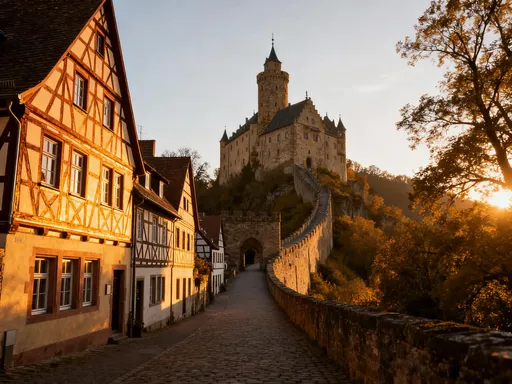
Then, as I turned a corner onto Maxbrücke, the castle came fully into view—perched on a sandstone ridge, its towers rising above the treetops. That moment was transformative. The fortress, once a seat of imperial power, now serves as a silent guardian of the city’s identity. It doesn’t dominate the skyline with aggression, but with dignity. For a first-time visitor, this view sets the tone: Nuremberg is not about spectacle for spectacle’s sake. It’s about continuity, resilience, and the quiet strength of a place that has chosen to rebuild not just its buildings, but its soul.
The Heart of the City: Exploring Nuremberg’s Altstadt (Old Town)
The Altstadt of Nuremberg is not merely a tourist destination—it’s the living pulse of the city. As I entered through the Sebaldustor, one of the original medieval gates, the atmosphere shifted instantly. The noise of traffic faded, replaced by the soft echo of footsteps on cobblestones and the distant chime of church bells. Ahead lay the Hauptmarkt, the central square that has served as Nuremberg’s commercial and social heart since the 13th century. Even on a quiet weekday morning, the space felt alive. Locals sipped coffee at sidewalk cafés, shopkeepers arranged displays of gingerbread and handcrafted toys, and sunlight danced across the ornate stonework of the Frauenkirche.
At the center of the square stands the Schöner Brunnen, a 19-meter-tall Gothic fountain adorned with 40 gilded figures representing the Holy Roman Empire’s hierarchy. Though the current structure is a 19th-century replica—protected by a glass case to prevent damage—the original spirit remains. According to local tradition, turning the golden ring embedded in the railing brings good luck. I watched as a young girl reached up, spun the ring with both hands, and smiled as if she’d unlocked a secret. These small rituals, passed down through generations, are part of what makes Nuremberg’s old town feel so deeply human.
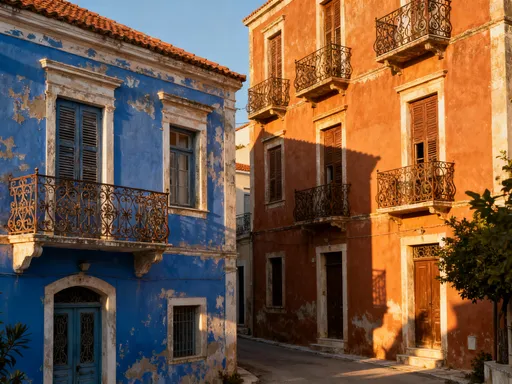
One of the most striking features of the Altstadt is its concentration of Fachwerk, or half-timbered houses. Nowhere is this more evident than on Weißgerbergasse, a narrow street lined with colorful 16th-century homes. Once home to tanners—‘Weißgerber’ meaning ‘white tanners’—the street has been meticulously preserved and is considered one of Germany’s finest examples of medieval urban architecture. The houses lean slightly with age, their wooden beams darkened by time, yet each one is vibrant with painted shutters and flower boxes. What’s remarkable is how functional these buildings remain: many now house boutique shops, galleries, and family-run restaurants, proving that historic preservation and modern life can coexist.
The layout of the Altstadt reflects a level of urban planning that was remarkably advanced for its time. Designed around two main churches—St. Sebald and St. Lorenz—the city grew in concentric rings, with defensive walls enclosing the core. Even today, the street grid follows these ancient patterns. This continuity is not just architectural—it’s cultural. The same families have lived, worked, and worshipped in these spaces for centuries. Walking through the Altstadt, one doesn’t feel like an outsider looking in, but a guest welcomed into a long-standing tradition of craftsmanship, community, and care.
Kaiserburg Castle: Power, History, and Panoramic Views
No visit to Nuremberg is complete without ascending to Kaiserburg Castle, the imperial fortress that has overlooked the city for over 900 years. Perched on a sandstone outcrop 50 meters above the Pegnitz River, the castle complex is not a single structure but a network of fortifications, palaces, and chapels spread across three distinct sections: the Burgraves’ Castle, the Imperial Castle, and the Zwing Castle. Each served a different function—residence, administration, defense—and together, they form one of the most significant medieval fortresses in Europe. As I passed through the outer gate, I was struck by the sheer scale of the walls, some over ten meters thick, built to withstand both siege and time.
The Imperial Castle, once a favored residence of Holy Roman Emperors, contains some of the most well-preserved Romanesque and Gothic architecture in Germany. The Palas, the main residential building, houses the Kaiserzimmer (Emperor’s Chamber) and the monumental Rittersaal (Knights’ Hall), where imperial diets were held. Though much of the interior was reconstructed after wartime damage, the restoration work was based on extensive historical records, ensuring authenticity. Standing in the Rittersaal, with its vaulted ceiling and arched windows overlooking the city, I could almost hear the echoes of council meetings and royal decrees. The room’s proportions are majestic but not overwhelming—a reflection of medieval ideals of order and hierarchy.
One of the most astonishing features of the castle is the Tiefbrunnen, or deep well, located in the outer courtyard. At over 52 meters deep, it was the city’s primary water source during sieges and remains the deepest well of its kind in Europe. Dug by hand through solid rock, it is a testament to medieval engineering. A replica bucket allows visitors to lower a rope and feel the weight of history—literally. The well wasn’t just practical; it was strategic. Its presence meant the castle could withstand months of isolation, a critical advantage in an era of constant conflict.
What makes Kaiserburg more than a relic is its role as a masterclass in medieval design. Every element—from the placement of watchtowers to the sloped terrain used for defense—was calculated for efficiency and survival. The Zwing Castle, the outermost section, functioned as a defensive buffer, while the Burgraves’ Castle housed the local rulers who managed daily affairs. Today, the site is managed by the Bavarian Administration of State-Owned Palaces, Gardens and Lakes, which ensures ongoing preservation and public access. Climbing to the Sinwell Tower at sunset, I watched as the city below turned gold, its rooftops stretching like a patchwork quilt. In that moment, the castle wasn’t just a monument—it was a lens through which to understand Nuremberg’s enduring spirit.
Beyond the Postcard: Hidden Courtyards and Quiet Alleys
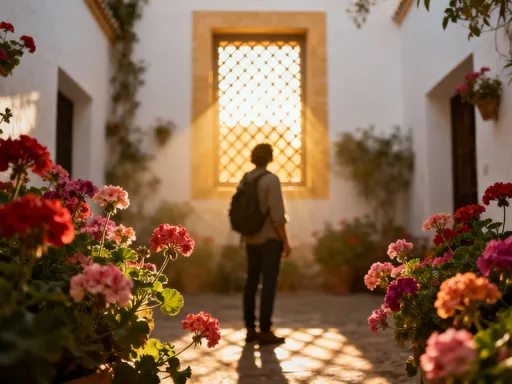
While the main squares and landmarks draw the crowds, Nuremberg’s true magic lies in its quieter corners—hidden courtyards, narrow passageways, and forgotten archways that reveal a more intimate side of the city. One of the most moving discoveries was the Totenkirchhof, a serene courtyard adjacent to the former St. Klara Convent. Once a burial ground for nuns, it is now a tranquil garden enclosed by ivy-covered walls and arched cloisters. Benches invite contemplation, and the only sounds are the rustle of leaves and the occasional birdcall. Unlike the bustling Hauptmarkt, this space feels suspended in time, a place where history breathes softly rather than shouts.
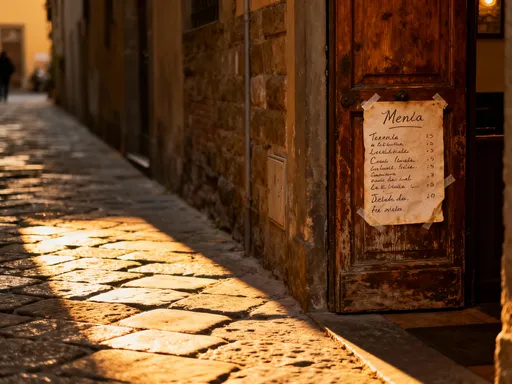
These secluded areas are not accidental. Many were once the private courtyards of patrician families—wealthy merchants and civic leaders who shaped Nuremberg’s golden age in the 15th and 16th centuries. Behind unassuming wooden doors along streets like Hirschelgasse and Schildgasse, one can still find these inner sanctuaries, some open to the public, others preserved for private use. What’s remarkable is the level of craftsmanship still visible—the carved stone lintels, the hand-forged iron railings, the intricate woodwork on staircases and balconies. These details were not made for tourists; they were made for daily life, a reflection of pride and artistry woven into the fabric of the city.
The preservation of these spaces speaks to Nuremberg’s broader philosophy: authenticity over spectacle. After the war, there was a strong movement to rebuild not just the facades, but the soul of the city. Restoration teams used old photographs, city plans, and even paint samples to recreate lost elements with precision. Yet, they avoided over-restoration. Original fragments were left visible—chipped stones, mismatched bricks—as reminders of the city’s journey. This approach ensures that Nuremberg does not feel like a theme park, but a real place with a real past.
For visitors willing to wander off the main paths, these hidden spots offer a deeper connection to the city. I found myself pausing in a small courtyard off Rathausplatz, where sunlight filtered through a linden tree and illuminated a weathered relief of St. George slaying the dragon. There were no signs, no crowds, just quiet beauty. In such moments, Nuremberg reveals itself not as a destination, but as an experience—one that rewards curiosity, patience, and respect for the unseen.
Contrast & Continuity: Modern Architecture in a Historic City
Nuremberg’s architectural narrative is not confined to the medieval era. The city’s post-war reconstruction presented a profound challenge: how to rebuild a devastated urban center without erasing its identity. The answer was not imitation, but integration. Architects and planners adopted a philosophy of continuity—honoring the past while embracing the present. This is evident in the careful restoration of landmarks like St. Lorenz Church, a masterpiece of Gothic architecture that was heavily damaged in 1945. The rebuilding, completed in the 1950s, retained the church’s original silhouette and stonework while introducing subtle modern elements, such as simplified interior details and new stained-glass windows designed with contemporary aesthetics.
The contrast between old and new is particularly striking at the Documentation Center Nazi Party Rally Grounds, a museum housed in a former Congress Hall designed by Albert Speer. Rather than demolishing the structure, the city chose to repurpose it as a space for education and reflection. The architecture of the center is deliberately understated—glass and steel additions contrast with the neoclassical bulk of the original building, creating a visual dialogue between past and present. Inside, exhibitions use historical artifacts, photographs, and personal testimonies to examine the rise and consequences of the Nazi regime. The building itself becomes part of the lesson: a monument not to power, but to accountability.
Modern design also appears in subtler ways throughout the city. Public spaces like the Ehekarussell fountain near the Frauenkirche blend whimsy and history, depicting couples from different eras in a playful nod to Nuremberg’s social evolution. Newer buildings in the city center, such as the City-Arkaden shopping complex, use materials and proportions that echo traditional facades without mimicking them. Even street furniture—benches, lighting, signage—follows a design language that complements rather than competes with the historic environment.
This balance between tradition and innovation reflects a deeper truth about Nuremberg: that a city’s strength lies not in resisting change, but in guiding it with intention. The post-war generation made a conscious choice—to remember, to rebuild, and to move forward without forgetting. Today, that legacy lives on in every carefully restored beam, every thoughtfully designed addition, and every public space that invites both locals and visitors to engage with history in a meaningful way.
Walking the Walls: A Unique Perspective from the City’s Fortifications
One of the most unique ways to experience Nuremberg is by walking along its medieval city walls, a nearly five-kilometer circuit that once protected the city from invasion. Today, this elevated path offers not only panoramic views but a physical journey through time. I began my walk at the Frauentor, one of the few remaining city gates that still stands in its original form. Passing beneath its arched entrance, I stepped onto the wall walk—a broad stone pathway flanked by towers and battlements. From this vantage point, the city unfolds in layers: red-tiled rooftops, church spires, tree-lined parks, and the distant curve of the Pegnitz River.
The walls date back to the 14th century, though their foundations incorporate even older Roman and early medieval structures. Over the centuries, they were expanded and reinforced, resulting in a complex system of towers, bastions, and defensive gates. One of the most impressive sections is the Bastion Henkersschlag, a massive fortified platform that once housed artillery. Standing there, I could see how the city’s geography was used to its advantage—the elevated terrain, the river bends, the clear lines of sight for archers and gunners. The walls were not just barriers; they were intelligent systems of protection, designed with both strength and strategy.
What makes the wall walk so special is its accessibility. Unlike many historic fortifications that are closed off or fragmented, Nuremberg’s walls remain largely intact and open to the public. The path is well-maintained, with informational panels that explain the history of each section. Along the way, I passed families with strollers, joggers, and elderly couples enjoying the view—proof that this ancient structure has been successfully integrated into modern civic life. In some areas, the walls give way to parkland, where children play beneath the shadow of medieval towers, blending recreation with remembrance.
As I walked, I noticed how the textures of the city changed with the light. In the morning, the sandstone glowed warm and golden; by afternoon, the shadows deepened, revealing the scars of time. Each brick, each repaired section, tells a story of survival. The walls, like the city itself, have been broken and rebuilt, yet they stand—stronger for having endured. Completing the circuit near the Katharinentor, I felt a deep sense of connection, not just to Nuremberg’s past, but to the quiet resilience that defines its present.
Why Nuremberg’s Architecture Stays With You
Nuremberg’s architecture lingers in the mind long after the visit ends, not because it is perfect, but because it is honest. It does not hide its wounds; it displays them with dignity. The rebuilt facades, the preserved ruins, the careful restorations—all speak of a city that has chosen to remember rather than erase. This emotional resonance is what sets Nuremberg apart from other historic destinations. It is not a frozen tableau of the past, but a dynamic conversation between centuries. Every building, every street, every courtyard carries the weight of history, yet remains open to the present.
The balance between resilience and beauty is perhaps the city’s greatest lesson. After the devastation of war, Nuremberg could have chosen modernization over memory. Instead, it chose to rebuild with care, using traditional methods and materials to restore not just structures, but identity. This commitment to authenticity has created a place that feels lived-in, loved, and deeply human. Visitors don’t just see history—they feel it in the cool stone of a castle wall, the creak of a wooden staircase, the quiet of a hidden courtyard.
Moreover, Nuremberg demonstrates how a city can evolve without losing its soul. The integration of modern architecture, the thoughtful use of public space, and the emphasis on education and reflection show a community invested in its future as much as its past. The Documentation Center, the restored churches, the living Altstadt—all are testaments to a collective will to learn, heal, and grow.
In the end, Nuremberg invites more than admiration. It invites introspection. It asks us to consider how we preserve our own histories, how we rebuild after loss, and how we honor the places that shape us. For the traveler, it offers beauty, depth, and inspiration. For the thoughtful observer, it offers a model of courage, continuity, and care. Nuremberg is not just a city to visit. It is a story to carry forward.
Nuremberg’s architecture is more than bricks and mortar—it’s a testament to endurance, identity, and artistry. Every street corner, every restored beam, tells a story of survival and pride. This city doesn’t just invite you to look—it invites you to feel. Whether you're drawn to history, design, or simply beautiful places, Nuremberg leaves a mark that lingers long after you’ve checked out.